Introduction
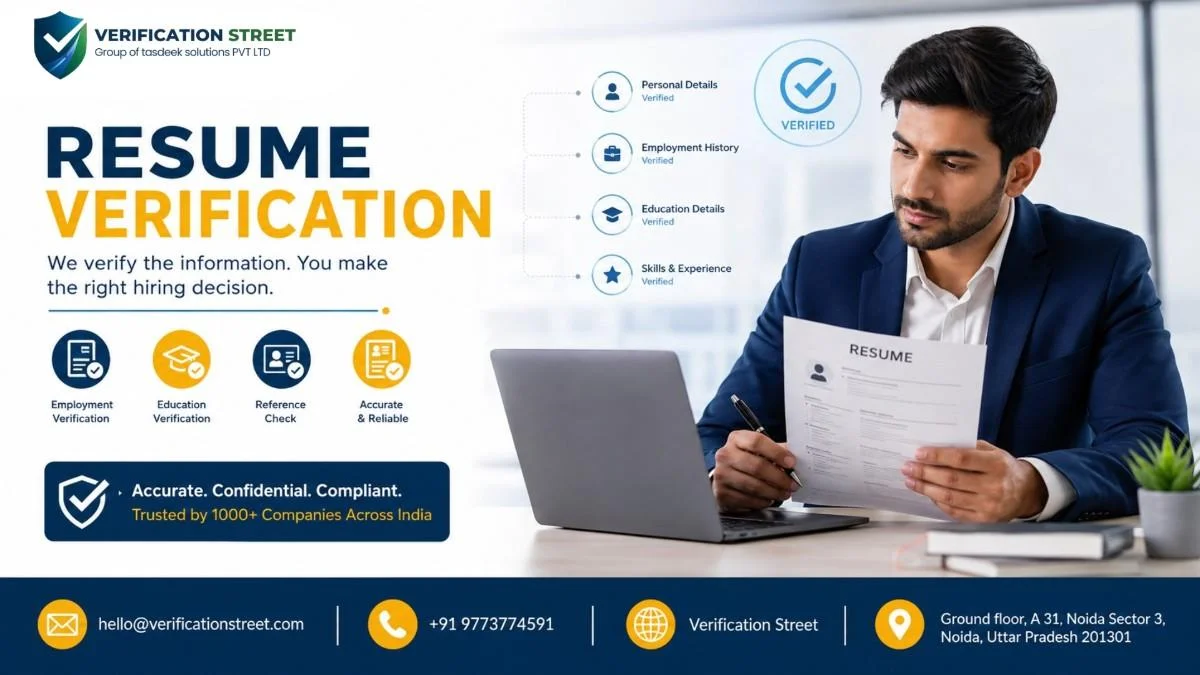
Resume verification is the process of checking whether the information provided by a candidate in a resume is correct and supported by reliable records. In India, employers use resume verification to check employment history, job titles, dates of employment, education details, skills, and unexplained gaps before making an informed hiring decision.
A resume can look complete and professional, but some details may be incorrect, outdated, or difficult to confirm. This can create hiring risks for companies, especially in industries where employees handle customer information, financial data, business operations, vehicles, or client systems. A structured verification process helps HR teams identify inconsistencies before they become a workplace problem.
What Is Resume Verification?
Resume verification is a background screening process used to confirm important information mentioned in a candidate’s resume. Depending on the role and employer’s requirements, the check may include previous employment, designation, joining and leaving dates, education, job responsibilities, and other career details.
The purpose is not simply to find mistakes. It is to compare the information provided by the candidate with information available from appropriate and reliable sources. Employers can then make decisions based on verified information rather than relying only on a resume.
Why Is Resume Verification Important for Employers?
Resume verification helps employers reduce the risk of hiring candidates who provide false or incomplete information. Incorrect employment dates, inflated job titles, fake experience, or unexplained career gaps can affect workforce planning and business operations.
This check is particularly useful for finance companies, BPOs, transport companies, staffing firms, and businesses hiring employees for sensitive roles. For US IT staffing companies, verification can also help clients receive more reliable candidate information before a profile is submitted for a project.
For transport and driver-related roles, employers may need a broader screening process based on the position and applicable requirements. Resume verification can confirm the candidate’s stated work history, but it should not be treated as a replacement for other role-specific checks.
What Does a Resume Verification Check Include?
A resume verification check normally focuses on the information that matters for the role. Employment history may be checked against previous employer records to confirm the company name, designation, employment dates, and other permitted details.
Education information may also be reviewed when qualifications are important for the position. Where relevant, employers can verify whether the stated qualification matches available records. Other resume claims may require separate checks because not every detail can be confirmed through employment verification alone.
The scope should be decided according to the job, company policy, applicable laws, and the information the candidate has authorized the employer or verification provider to check.
Employment Gap Check and Resume Gap Verification
An employment gap check helps employers understand periods when a candidate may not have been working. A gap does not automatically mean that a candidate is unsuitable. People may take career breaks for education, personal reasons, family responsibilities, health-related situations, travel, business activities, or other legitimate reasons.
During a gap employment verification, the goal is to understand whether the dates provided by the candidate are consistent. HR teams can compare the employment timeline with information supplied by the candidate and ask for clarification where a significant gap appears.
A resume gap check can be especially useful when the resume shows several employment periods but does not clearly explain the time between them. The purpose should be verification and clarification, not unfair judgment.
Resume Verification Process in India
The resume verification process generally starts when the employer decides which information needs to be checked for a particular position. The candidate is informed about the verification requirements and provides the necessary details and consent according to the employer’s process.
The verification team then reviews the submitted information and contacts appropriate sources or checks permitted records. Employment dates, job titles, company details, and other agreed information may be compared with the candidate’s resume.
If information does not match, the discrepancy should be reviewed carefully. A mismatch may result from a genuine difference in records, incorrect information, a data-entry mistake, or incomplete details. The final result should therefore be based on evidence and proper review rather than assumptions.
Resume Verification for Different Industries
For transport companies, resume verification can help confirm previous employment and experience stated by drivers and other operational employees. It should be combined with other checks required for safety-sensitive roles.
For finance companies, accurate employment and qualification information can be important because employees may handle financial records, customer information, and sensitive business processes. Resume verification can form one part of a wider employee screening program.
For BPO companies, verification can support large-scale recruitment by checking candidate information consistently. This can be useful when employees will handle customer data, client accounts, or business processes.
For US IT staffing companies, resume verification can help staffing firms validate experience and employment information before presenting candidates to clients. Accurate candidate profiles can support better client confidence and reduce issues caused by incorrect experience claims.
For domestic staffing companies, resume verification can help employers understand whether a candidate’s stated work history and experience are consistent with available verification results.
Resume Verification Checklist for Employers
A practical resume verification checklist should cover the information that is important for the specific role. Employers can review the candidate’s full name, previous employer names, employment dates, job title, relevant experience, education details, and career gaps.
The HR team should also compare information across the resume, application form, and verification results. Any mismatch should be recorded and reviewed before a final decision is made.
Employers should maintain a consistent process for candidates applying for similar roles. They should also handle personal information carefully and follow applicable privacy, consent, and employment requirements.
How to Choose a Resume Verification Service in India
When selecting a resume verification service, employers should look beyond price. A reliable provider should have a clear verification process, defined turnaround times, proper data handling practices, and transparent reporting.
It is also useful to choose a provider that understands different employment sectors and can support verification requirements for corporate employees, BPO staff, finance teams, transport workers, drivers, and staffing candidates.
Verification Street provides background verification solutions designed to help businesses verify candidate information through structured screening processes. Employers can explore the Resume Verification Service to understand the available verification approach and service scope.
What Are Common Resume Verification Red Flags?
Common red flags can include employment dates that do not match, companies that cannot confirm the stated employment, job titles that differ significantly from available records, unexplained employment gaps, or major differences between the resume and verification information.
However, a red flag should not automatically be treated as proof of fraud. Employers should review the information, give the candidate an opportunity to clarify genuine discrepancies, and make decisions using consistent internal policies.
Conclusion
Resume verification gives employers a structured way to check important information before making an employment decision. By reviewing employment history, career dates, qualifications, and employment gaps, companies can identify inconsistencies and improve their screening process. The check is valuable across industries such as finance, BPO, transport, IT staffing, and domestic staffing. A fair process should rely on verified information, proper consent, consistent policies, and careful handling of candidate data.
FAQs
1. What is resume verification?
Resume verification is the process of checking key information provided in a candidate’s resume, such as employment history, job title, employment dates, and relevant qualifications, against appropriate sources.
2. What is an employment gap check?
An employment gap check reviews periods between jobs to understand whether the candidate’s employment timeline is complete and consistent. A career gap itself is not proof of a problem.
3. How does resume verification help employers?
Resume verification helps employers identify inconsistencies in employment and career information before making an employment decision. It can support a wider background screening process.
4. Can resume verification detect fake experience?
Resume verification can identify information that cannot be confirmed or does not match available records. However, the result depends on the quality and availability of the information being verified.
5. How long does resume verification take in India?
The turnaround time can vary depending on the information required, the responsiveness of verification sources, and the complexity of the case. Employers should ask their verification provider for the expected timeline for their specific requirement.
6. Is resume verification the same as background verification?
No. Resume verification generally focuses on information stated in a candidate’s resume. Background verification can cover a wider range of checks, such as identity, address, education, employment, criminal records, references, and other checks depending on the employer’s requirements.